
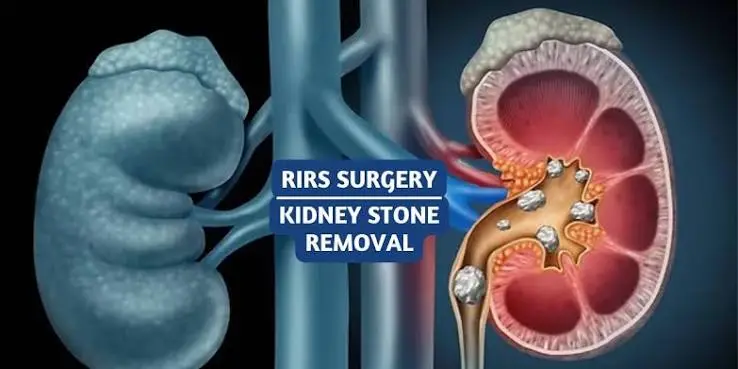
Kidney stone removal used to be synonymous with long hospital stays, large incisions, and weeks of painful recovery. Today, medical advancements have completely transformed the patient experience. Retrograde Intrarenal Surgery (RIRS) stands at the forefront of this revolution.
If you have been diagnosed with kidney stones and are dreading the thought of surgery, RIRS offers a modern, minimally invasive alternative. Let’s break down why it has become the gold standard for treating complex kidney stones.
"Patients often delay necessary treatment because they fear surgical cuts and scars. RIRS changes that narrative entirely—we can safely remove stubborn stones without making a single incision on the body."
1. Zero Incisions, Zero Scars
Unlike traditional open surgery or even PCNL (which requires a small puncture in the back), RIRS is performed completely through the body's natural urinary tract. A highly flexible, ultra-thin fiberoptic endoscope is passed through the urethra and bladder, directly up into the kidney. Because there are no cuts, there is zero risk of surgical scarring.
2. Unmatched Laser Precision
Once the scope reaches the kidney, the surgeon uses a high-definition monitor to locate the exact position of the stone. A state-of-the-art Holmium or Thulium laser is then fired to vaporize the stone into fine dust. This precision ensures that the surrounding healthy kidney tissue remains completely untouched and unharmed.
3. Rapid 24-Hour Recovery
Because there is no tissue trauma or stitches, the recovery time is drastically reduced. Most patients experience only mild discomfort and are discharged from the hospital within 24 hours. You can generally return to your normal desk job and daily routine within 2 to 3 days.
Who is the Ideal Candidate for RIRS?
- Patients with stones measuring up to 2 cm.
- Individuals with stones in hard-to-reach areas like the lower kidney pole.
- Patients on blood thinners who cannot undergo invasive surgery.
- Cases where previous Shockwave Lithotripsy (ESWL) has failed.
Choosing the right procedure is a critical medical decision. While RIRS is incredibly safe and effective, a thorough diagnosis via ultrasound or CT scan is necessary to determine if it is the best approach for your specific stone size and location.